SurviveX Large Pro First Aid Kit Review (2026): Worth It for Your Family?
Most family first aid kits are glorified band-aid boxes. After three blackout events and one flood, I needed something that could actually handle a real emergency. Here's whether SurviveX delivers.
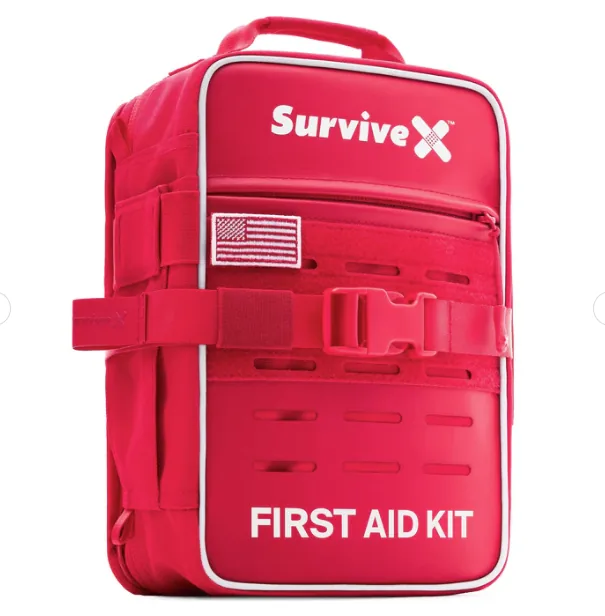
The SurviveX Large Pro First Aid Kit is a genuine upgrade from standard consumer kits. At USD $150.99 (~AUD $230 / GBP £120 / CAD $205), you get 270 professional-grade components including Zip Stitch wound closures, a CPR mask, trauma shears, conforming splint, and hydrogel burn gel — items missing from most kits at this price. It's FSA/HSA eligible for US buyers (effective 20–35% discount). The main gap: no tourniquet. Rated 8.4/10. Best for: families serious about emergency preparedness who want one kit that handles real trauma, not just scraped knees.
📋 Quick Verdict — SurviveX Large Pro First Aid Kit (2026)
📦 Product at a Glance
| Category | First Aid Kit |
| Format | Physical backpack kit — 270 components |
| Best For | Families, preppers, outdoors AU/US/UK/CA |
| Price (USD) | $150.99 (was $179.99) |
| Guarantee | 60-day money-back |
| Our Rating | 8.4/10 |
What Sends Families Looking at Professional First Aid Kits
Our family's previous first aid kit was a green plastic box from Bunnings. It had 40 band-aids, some antiseptic wipes, and a triangular bandage. During our second flood event — when we were cut off for four days and our neighbour had a deep laceration from storm debris — I realised how inadequate it was. We couldn't close the wound properly. The nearest hospital was inaccessible by road.
That was when I started researching what a serious family first aid kit actually needs. SurviveX kept coming up in searches, particularly for the combination of professional-grade contents and an organisational system that works under pressure. The fact that it's designed by first aid experts rather than assembled from whatever's cheapest made it worth a close look.
"Our neighbour had a deep laceration and we couldn't close it. The nearest hospital was 40 minutes away on a good day, and the road was flooded. That's when a basic first aid kit isn't enough."
I want to be direct upfront: I'm a mum in regional NSW, not a paramedic or medical professional. This review is based on my research into SurviveX's product specifications, independent reviews from emergency preparedness experts, and comparison against what I've seen in real emergency scenarios in my area. If you need clinical medical advice, consult a professional.
What's Actually Inside: The 270-Piece Breakdown
The number that separates SurviveX from generic kits isn't the piece count itself — it's what those pieces are. Generic kits pad their numbers with duplicate band-aids and cheap plastic tweezers. SurviveX uses a different approach: fewer duplicates, more capability.
| Category | Key Items | Why It Matters |
|---|---|---|
| 🔴 Wounds | Zip Stitch wound closures, gauze rolls, non-adherent dressings, Israeli pressure bandage, strip closures, antibiotic ointment | Zip Stitch allows field closure of lacerations without stitches — the standout item missing from most consumer kits |
| 🟡 Burns | Hydrogel burn gel packets, burn dressings (sterile, 4"×4") | Burns are a genuine risk in bushfire country and during power outage cooking accidents — most kits include nothing for burns |
| ⚫ Tools | Trauma shears (cuts through denim), 18" conforming splint, CPR mask with valve, triangular bandage, nitrile gloves (multiple pairs) | Trauma shears and a proper splint are essential for immobilising fractures when evacuation is delayed |
| 🔵 Hygiene | BZK antiseptic wipes, alcohol prep pads, triple antibiotic ointment packets | Wound infection is a serious risk in flood situations — antiseptic supplies are critical in contaminated water scenarios |
| 🟢 Personal Care | Thermal emergency blanket, glow sticks, whistle, first aid instruction guide | Hypothermia risk is real in flood evacuations — thermal blanket adds meaningful value for Australian winters and UK/Canadian cold |
The Organisational System: Does It Actually Work Under Pressure?
A first aid kit that you can't navigate quickly is a liability, not an asset. SurviveX uses a color-coded system across all their kits:
- Red compartments — Wound care supplies
- Blue compartments — Hygiene and antiseptic
- Teal compartments — Personal care
- Black compartments — Tools
Once you learn the system (which takes about five minutes), you can navigate the kit by colour alone, even in low light or when your hands are shaking. Independent reviews consistently note this as a genuine advantage over clamshell-style kits where everything is visible at once but nothing is grouped logically.
The MOLLE-compatible exterior means you can attach it to a pack, headrest, or vehicle — useful for Australian families keeping a kit in the car for remote drives or camping trips. The 900D fabric construction (military-grade material) is rated to handle rough handling, which matters if you're grabbing the kit during a flood evacuation.
Price by Market: AU, US, UK and Canada
| Market | Approx. Price | Notes |
|---|---|---|
| 🇺🇸 US | USD $150.99 | Best value — FSA/HSA eligible (20–35% effective discount). Also on Amazon. Ships within 12 hours. |
| 🇦🇺 AU | ~AUD $230 | Plus international shipping. No local stockist confirmed at time of writing. |
| 🇬🇧 UK | ~GBP £120 | Plus international shipping. TSA-approved bag design. |
| 🇨🇦 CA | ~CAD $205 | Plus international shipping. Relevant for remote BC, Alberta, and Ontario families. |
What It Gets Right, and What It Misses
✓ What Works
- Zip Stitch wound closures — field suturing without stitches
- Color-coded MOLLE system works under pressure
- 270 pieces prioritising capability over filler
- FSA/HSA eligible — 20-35% effective discount for US buyers
- CPR mask with valve included
- Trauma shears, conforming splint, Israeli bandage
- Hydrogel burn gel — missing from most kits
- 900D MOLLE bag — durable and attachable
- 1K+ monthly buyers — proven demand
- Designed in Virginia with FDA-approved items
✗ What Doesn't
- No tourniquet — most significant gap for serious trauma
- Some piece count includes small/duplicate items
- International shipping adds cost for AU/UK/CA
- No Australian local stockist confirmed
- Bag may be over-engineered for pure home use
- Requires learning the colour system to use efficiently
Who This Is For — and Who It Isn't
| Scenario | Verdict |
|---|---|
| US families with FSA/HSA dollars to use before year-end | ✓ Strong fit — most cost-effective purchase with pre-tax dollars |
| Australian families in flood-prone, bushfire, or remote areas | ✓ Strong fit — trauma capability matches real AU emergency scenarios |
| Families who do long road trips, camping, or 4WD in remote AU/CA/UK | ✓ Strong fit — MOLLE bag made for vehicle and pack attachment |
| Canadian families in BC wildfire zones or rural Ontario/Alberta | ✓ Strong fit — delayed medical access scenario matches kit capability |
| Families wanting a basic kit for urban home use only | ✗ Overkill — a $40 St John kit covers minor home injuries adequately |
| Someone wanting a kit that includes a tourniquet | ✗ Not the right fit — add a CAT tourniquet separately |
| Preppers building a complete trauma kit | ✓ Strong base — add CAT tourniquet + QuikClot gauze to complete the picture |
SurviveX vs. the Supermarket Kit Most Homes Own
The typical Bunnings first aid kit cost about AUD $35. It had band-aids, antiseptic wipes, some gauze, and basic scissors. No wound closure strips. No burn treatment. No splint. No CPR mask.
For everyday scraped knees and minor cuts, it was fine. For the neighbour's laceration during the flood, it was useless. The difference between a $35 consumer kit and a $150 professional kit isn't just the piece count — it's whether you can actually handle a real emergency while waiting for help that might be hours away.
For Australian families in regional areas where road access can be cut during floods, fires, or cyclones, the case for a professional kit is clear. The question isn't whether it's worth the price — it's whether the price is accessible. At AUD ~$230 plus shipping, it's a genuine investment.
SurviveX Large Pro First Aid Kit
Ready to Upgrade Your Family's First Aid Kit?
The difference between a consumer kit and a professional kit is whether you can handle a real emergency while waiting for help. SurviveX is built for the scenario where help is delayed.
View SurviveX Large Pro Kit →Frequently Asked Questions
My Final Verdict
It is a genuinely good product that fills a real gap in the family preparedness market. The Zip Stitch wound closures alone justify buying this over a generic consumer kit. They allow you to do something useful in a real emergency that most families currently can't do with what they have at home.
The price is real money, especially for Australian and UK buyers factoring in international shipping. But compare it to what you'd pay out-of-pocket for a hospital visit that could have been avoided with proper field treatment, and the maths shifts considerably.
Add a CAT tourniquet and you have a genuinely comprehensive family first aid kit. Without one, SurviveX handles 90% of real emergency scenarios very well.
For US buyers with FSA/HSA funds available: this is one of the smartest uses of those dollars. Buy it before they expire.
For a broader comparison of emergency preparedness products, see our full guide to the best family preparedness products in 2026.
Medical disclaimer: Erin Delaney is a family preparedness enthusiast, not a medical professional. This review reflects research and personal assessment only. Always seek professional medical advice for health emergencies. First aid training from St John Ambulance (AU), Red Cross, or equivalent is strongly recommended alongside any first aid kit purchase.