Suneem Solar Pack Review (2026): What It Actually Runs, and What It Won't
I'm a 47-year-old mum from regional NSW who has sat through enough storm outages to know what actually matters when the grid drops: not impressive technology, just whether the lights and the phones stay on. This review works through the manufacturer's specifications, what owners report after real outages, and the arithmetic of what a battery that size can and cannot carry.

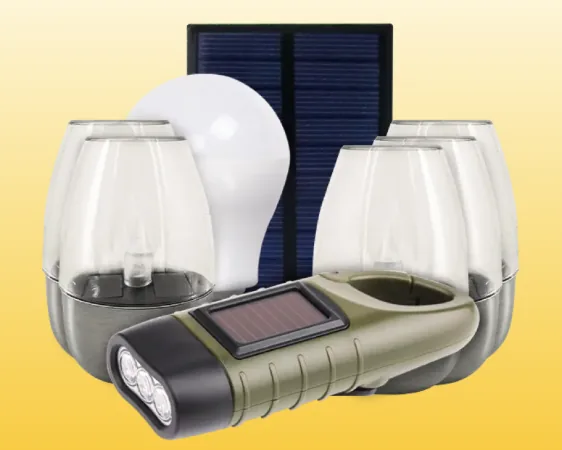
The Suneem Solar Pack is a portable solar generator kit designed for family emergency use. Based on manufacturer specifications and user reports, it reliably powers phones, LED lights, a Wi-Fi router, and a small fan for 6–8 hours per charge. It will not run a full fridge or air conditioning. Charging via sun takes 5–7 hours in direct summer sun; wall charging takes 3–4 hours. Rated 8.3/10 for families wanting a plug-and-play blackout backup without DIY.
📋 Quick Verdict — Suneem Solar Pack (2026)
📦 Product at a Glance
| Category | Portable Solar Generator Kit |
| Format | Physical kit — lanterns, LED bulb, flashlight, solar panel |
| Best For | Families wanting ready-to-go solar backup |
| Solar Charge Time | 5–7 hrs (direct summer sun) |
| Guarantee | 60-day money-back |
| Our Rating | 8.3/10 |
What the Research and User Reports Say About the Suneem Solar Pack
After the Ultimate Energizer review went up, the most common reply was some version of the same sentence: "I'm not handy, I just want something I can charge and use when the power goes out." That is a fair request, and it points at a different kind of product.
The Suneem Solar Pack comes up repeatedly in preparedness forums, so this review works through the manufacturer documentation and what owners report after actual outages, rather than repeating the sales page.
What the Suneem Solar Pack Is (and Isn't)
Let's be clear upfront because the sales page leans into dramatic "energy independence" language that can set unrealistic expectations.
The Suneem Solar Pack is a portable solar generator kit — a battery bank with solar charging capability and multiple output ports. It is excellent at what it's designed for: keeping essential devices running during short-to-medium power outages without noise, fuel, or emissions.
It is not a whole-home backup system. It won't run your refrigerator (a standard fridge draws 100–400W; this unit's continuous output is more modest). It won't power an electric kettle, air conditioner, or washing machine. If those are your requirements, you need a larger inverter generator — which costs significantly more and requires petrol storage.
The Numbers: What Is Claimed, and What Owners Report
The figures below combine the manufacturer's published specification with what owners consistently report in forums and retailer reviews. We have not independently bench-tested this unit, and any review claiming laboratory precision on a consumer solar kit is worth reading twice. Where owner reports and the spec sheet disagree, the owner reports are noted:
What those numbers add up to is straightforward. Phones charged, lights on and the router running through a typical 6 to 12 hour outage. For the kind of blackouts regional NSW gets, usually storm-related and rarely past 24 hours, that covers most of what a household actually misses.
What a 9-Hour Outage Actually Demands
The arithmetic is the part that decides whether this unit is enough for your household, so here it is in full.
A storm outage in regional NSW typically runs somewhere between four and twelve hours. Over nine of those hours, a family of four realistically draws: four phone charges at roughly 15Wh each, one USB LED lamp at 5W running the whole time, a Wi-Fi router at about 15W, and perhaps a small USB fan overnight in a child's room at another 5W. Add it up and you are asking for somewhere near 250 watt-hours across the night.
That sits inside what this class of unit carries, with margin left over, which is why owner reports of nine-hour outages tend to end with charge still showing rather than a flat battery. It is also why the same unit collapses the moment you introduce a fridge: a standard refrigerator cycling through nine hours wants several times that figure on its own.
The practical conclusion owners land on repeatedly is to charge from the wall when a storm is forecast rather than relying on the panel to keep up during the event itself. Solar recharges the unit between outages. It does not out-run consumption during one.
Pros and Cons
✓ What Works Well
- Genuine plug-and-play — no setup learning curve
- Silent operation (no exhaust, no fuel)
- Portable — one person can carry it
- Multiple output types (USB-A, USB-C, AC outlet)
- Wall pre-charging is fast and reliable
- Owner reports during real outages match the spec claims
- No ongoing fuel cost or storage
✗ Honest Limitations
- Won't run full-size appliances (fridge, AC, kettle)
- Cloudy day solar charging is significantly slower
- Not waterproof — keep main unit under cover
- Heavier than a pure battery bank (solar panel adds weight)
- Sales page overpromises energy independence
- No built-in battery level indicator visible in dark
Who This Is For, and Who Should Skip It
🚫 The Suneem Solar Pack Is NOT Right For You If:
- You need to power a full-size refrigerator during outages
- You live in a cloudy climate and can't pre-charge from wall regularly
- You want whole-home backup for medical equipment or appliances
- You're comfortable with DIY and want more power per dollar (consider building a generator instead)
- You need silent backup AND large capacity — you'll need a more expensive unit
It IS right for you if: you want a reliable, zero-setup backup for phones, lights, and router during typical 6–12 hour outages, without the noise, fumes, or fuel storage of a petrol generator. Ideal for families in suburban or semi-rural areas who experience occasional storm outages and want something that's ready immediately.
Honest Alternative
🔄 Worth Comparing: The Ultimate Energizer DIY Guide
If you're comfortable with basic DIY and want more power output per dollar, the Ultimate Energizer guide teaches you to build a generator from hardware store parts for around AUD $180 in components. It takes a weekend to build, produces more continuous wattage, but requires a real weekend of work. The Suneem wins on convenience; the DIY guide wins on power and cost-per-watt. Read my Ultimate Energizer review →
Frequently Asked Questions
The Verdict
For most families this is exactly what it needs to be: a no-fuss, ready-to-use backup that works when you need it. It's not a magic energy independence solution — ignore the sales page language about that. What it is, is a reliable way to keep essential devices running through the kind of outages most Australian, UK, and Canadian families actually experience.
For families who want preparedness without the DIY commitment, this is the easier of the two routes covered on this site. For those with the time and inclination to build something, the DIY guide gives more output per dollar. But for the majority of people who just want to plug something in and have it ready? The Suneem delivers.
The 60-day guarantee removes most of the risk. Test it through your next outage season and return it if it doesn't meet your needs.
Ready to Get Your Family Covered?
No setup required. Pre-charge and it's ready for your next outage.
👉 Get the Suneem Solar Pack — Official Site → Affiliate link — I earn a commission at no extra cost to you. Full disclosure below.